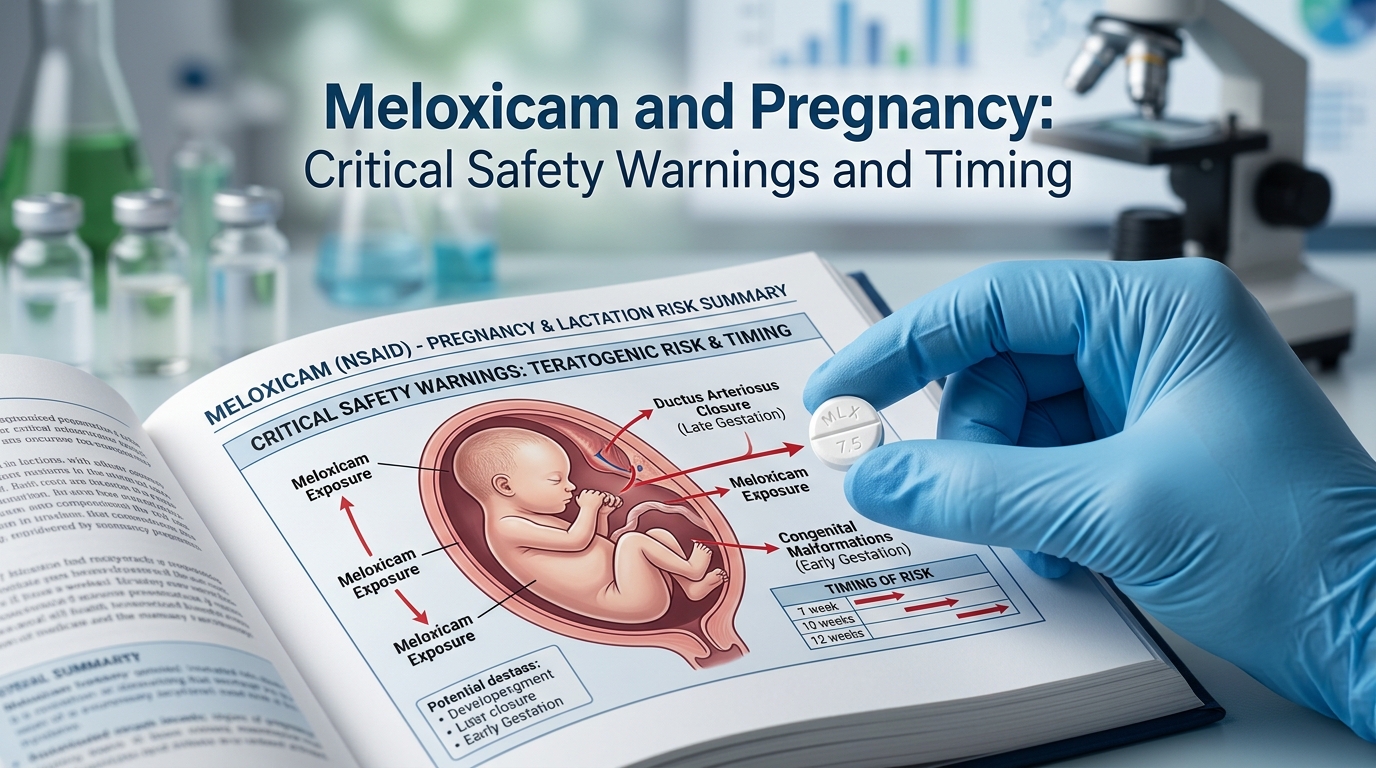
Meloxicam and Pregnancy: Critical Safety Warnings and Timing
By Frankie Sze | 5/2/2026
Understanding Meloxicam’s Safety Profile
Meloxicam is a prescribed painkiller belonging to a class of medications known as non-steroidal anti-inflammatory drugs (NSAIDs), as noted by the Medicines in Pregnancy resource. While patients often rely on it for chronic conditions—as discussed in our guide on Meloxicam 101: Your Daily Guide to Steady Joint Relief—its potency necessitates strict clinical oversight, particularly regarding reproductive health. Historically, NSAIDs were prescribed more liberally; however, evolving clinical data has fundamentally altered these practices. We now understand that meloxicam exposure around the time of conception is associated with a 2.32 times higher risk of miscarriage, a consequence of the drug’s ability to cause a reversible delay in ovulation by inhibiting the prostaglandin surge required for follicular rupture. Interestingly, researchers are currently investigating this specific mechanism, with Phase II clinical trials scheduled for 2026 to evaluate meloxicam as a potential component of emergency contraception.
For those currently pregnant, the clinical landscape is defined by the 2020 FDA notification that formally restricted NSAID use after 20 weeks of gestation. This guidance is critical because meloxicam can induce fetal kidney dysfunction and oligohydramnios, which may subsequently result in impaired fetal lung development and limb contractures. Furthermore, use after 30 weeks carries the primary risk of premature closure of the fetal ductus arteriosus. While current medical guidelines strictly advise against the use of meloxicam after 20 weeks unless deemed absolutely necessary—requiring rigorous monitoring via ultrasound—ongoing research continues to investigate the long-term neonatal outcomes associated with selective COX-2 inhibitor exposure during the second trimester. Clinicians and patients must remain vigilant, balancing the efficacy of long-acting relief with the profound physiological impact these medications exert on pregnancy.

Fertility and Conception: Can Meloxicam Affect Getting Pregnant?
For individuals actively trying to conceive, the pharmacological profile of meloxicam warrants careful consideration due to its direct impact on the ovulation cycle. As a nonsteroidal anti-inflammatory drug (NSAID), meloxicam works by inhibiting the prostaglandin surge that is physiologically essential for follicular rupture—the process by which a mature egg is released from the ovary. Clinical evidence underscores this disruption, noting that meloxicam resulted in a reversible delay of ovulation, an increase in follicular diameter, and a decrease in plasma progesterone level. This transient interference with reproductive timing is so pronounced that researchers are currently looking toward the future, with Phase II clinical trials scheduled for 2026 investigating the potential of meloxicam as a novel component of emergency contraception.
Beyond the challenges of initial conception, the safety profile of the medication shifts significantly once a pregnancy is established. Clinical data highlights a sobering correlation: NSAID exposure around the time of conception is associated with a 2.32 times higher risk of miscarriage. Furthermore, the clinical landscape has evolved since historical use of NSAIDs was standard practice; following a 2020 FDA notification, medical guidelines now strictly restrict meloxicam use after 20 weeks of gestation. During this window, the risks become critical, as usage can lead to fetal kidney problems and oligohydramnios—a condition of low amniotic fluid that may result in impaired lung development and limb contractures. Most critically, meloxicam use after 30 weeks carries the primary risk of premature closure of the fetal ductus arteriosus, a condition requiring diligent ultrasound monitoring if the medication is deemed medically necessary. For those planning to conceive, understanding these risks is essential, as the same mechanism that governs inflammation can, at the wrong moment, alter the course of early pregnancy.

The First Trimester: Miscarriage Risks and Early Development
The period surrounding conception and the first trimester represents a critical window of biological vulnerability, where pharmaceutical interventions can inadvertently disrupt delicate hormonal signaling. Emerging data has placed a renewed focus on non-steroidal anti-inflammatory drugs (NSAIDs) during this timeframe, particularly regarding reproductive health. It is now understood that meloxicam may cause a reversible delay in ovulation by inhibiting the prostaglandin surge essential for follicular rupture, a mechanism currently being studied in Phase II clinical trials as a potential component of future emergency contraception strategies. This biological sensitivity extends to the earliest stages of pregnancy; clinical research indicates that women exposed to NSAIDs around the time of conception were at an increased risk of miscarriage (OR 2.32, 95% CI 1.16-4.66).
As gestation progresses, the clinical concerns shift from reproductive outcomes to fetal development. While the historical use of NSAIDs was common practice, the landscape of prenatal care was permanently altered following clinical evidence linking these medications to premature closure of the fetal ductus arteriosus. This led to a 2020 FDA notification formally restricting NSAID use after 20 weeks of gestation, a mandate that reflects our current understanding of potential fetal kidney complications and reduced amniotic fluid levels. Specifically, the FDA warns that NSAID use after this threshold can trigger oligohydramnios, which risks impairing fetal lung development and potentially causing limb contractures. Furthermore, the risk of premature closure of the ductus arteriosus remains a primary concern for meloxicam use specifically after 30 weeks. Consequently, current medical guidelines mandate that these medications be avoided during the latter half of pregnancy unless medically indicated and subject to rigorous ultrasound monitoring as researchers continue to examine the long-term neonatal impacts of selective COX-2 inhibitor exposure.
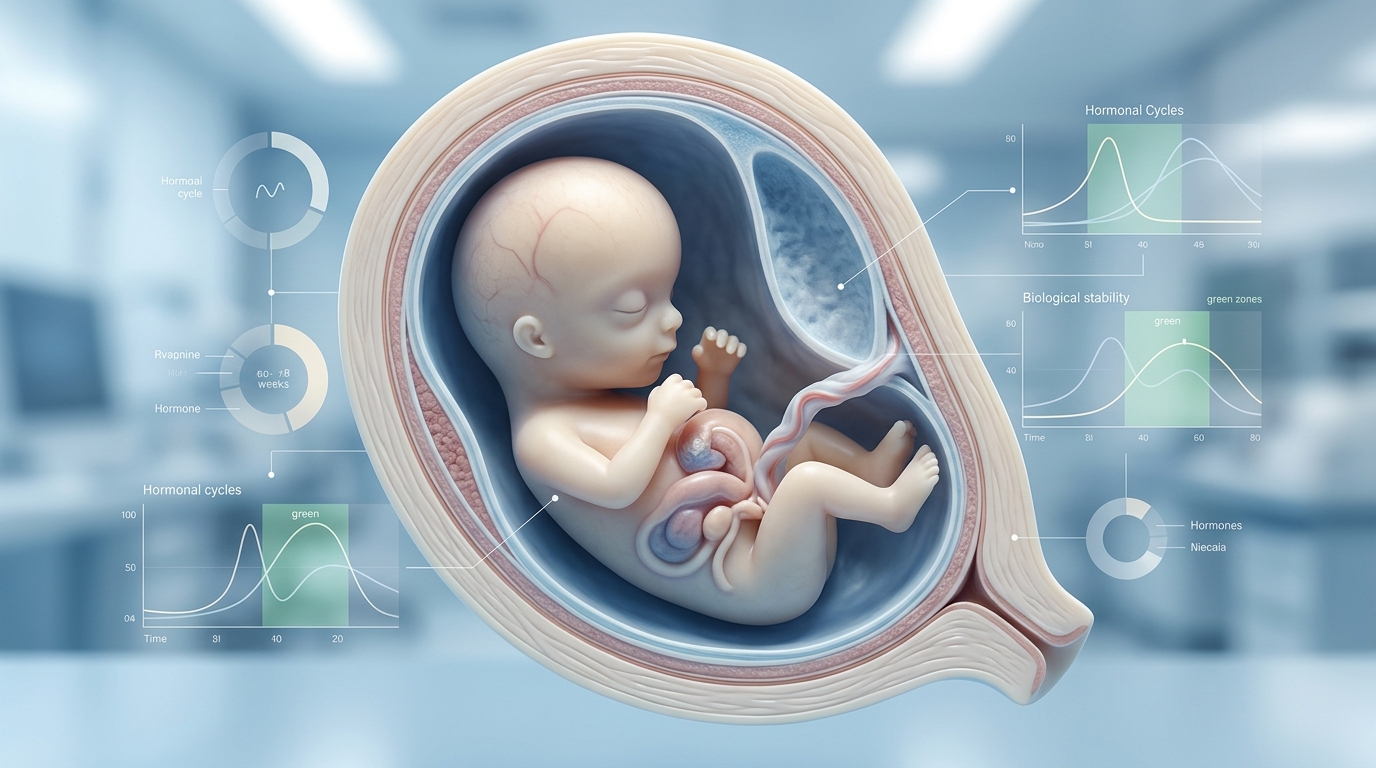
The 20-Week Critical Milestone: FDA Warnings Explained
Navigating medication safety during pregnancy requires a precise understanding of developmental milestones, particularly as they relate to the use of nonsteroidal anti-inflammatory drugs (NSAIDs). Historically, these medications were frequently utilized without clinical pause until longitudinal data revealed a clear link between NSAID exposure and premature ductus arteriosus closure. This clinical landscape shifted significantly in 2020, when the FDA issued a formal notification restricting the use of NSAIDs beyond 20 weeks of gestation. This regulatory mandate reflects the critical nature of the second trimester, where the fetal renal system begins to play an increasingly vital role in maintaining amniotic fluid levels.
The current clinical consensus is stark: NSAIDs, including meloxicam, should be avoided after 20 weeks of gestation unless strictly necessary under physician supervision. The underlying mechanism is profound, as the FDA warns that NSAIDs after week 20 of pregnancy can cause complications, some of which might be severe, such as: Reduced amniotic fluid around the baby – this can affect the baby’s lung and kidney development. This condition, known as oligohydramnios, poses a cascading threat to fetal health, potentially leading to impaired lung maturation and permanent limb contractures due to the restriction of movement within the womb.
The risks associated with meloxicam, specifically, extend beyond the second trimester. Around the time of conception, its use is associated with a 2.32 times higher risk of miscarriage, primarily because meloxicam causes a reversible delay in ovulation by inhibiting the prostaglandin surge required for follicular rupture. While researchers are investigating this property for potential future applications—including Phase II clinical trials scheduled for 2026 exploring meloxicam as a component of emergency contraception—this same potency underscores why it remains contraindicated during pregnancy. Furthermore, for those approaching the third trimester, the risk of premature closure of the fetal ductus arteriosus necessitates that any use beyond 30 weeks be monitored via serial ultrasounds, as the medical community continues to conduct ongoing research into the long-term neonatal outcomes of mothers exposed to selective COX-2 inhibitors during the second trimester.
Fetal Heart and Kidney Health: Potential Complications
The physiological transition from intrauterine to extrauterine life hinges on the patency of the ductus arteriosus, a vital fetal blood vessel that shunts oxygenated blood away from the lungs. When exposed to non-steroidal anti-inflammatory drugs (NSAIDs) like meloxicam, this vascular mechanism is placed at significant risk. As noted by the FDA, “Avoid use of NSAIDs in women at about 30 weeks gestation and later in pregnancy, because NSAIDs, including meloxicam oral suspension, can cause premature closure of the fetal ductus arteriosus,” a condition that can lead to catastrophic neonatal heart failure (FDA Prescribing Information).
The clinical understanding of these risks has evolved significantly; while NSAID use was once commonplace, a 2020 FDA notification formally restricted their administration after 20 weeks of gestation due to evidence of systemic harm. Beyond cardiovascular impacts, NSAID exposure at this stage is linked to fetal kidney dysfunction and the subsequent development of oligohydramnios. This reduction in amniotic fluid is not merely a marker of distress; it can result in life-altering complications, including impaired fetal lung development and limb contractures. Given these severe outcomes, current medical guidelines strictly advise against meloxicam use after 20 weeks unless absolutely necessary and monitored via ultrasound.
Clinicians must also consider the broader reproductive timeline. NSAID exposure around the time of conception is associated with a 2.32 times higher risk of miscarriage. Interestingly, while these drugs pose risks in late pregnancy, their ability to inhibit the prostaglandin surge necessary for follicular rupture—which can cause a reversible delay in ovulation—is currently being investigated in Phase II clinical trials scheduled for 2026 as a potential mechanism for emergency contraception. As we look toward the future, ongoing research continues to scrutinize the long-term neonatal outcomes of mothers who were exposed to selective COX-2 inhibitors during the second trimester, emphasizing the need for continued vigilance.
Safe Pain Management Alternatives During Pregnancy
Navigating pain relief while pregnant or planning to conceive requires extreme caution, particularly regarding nonsteroidal anti-inflammatory drugs (NSAIDs). While historical clinical practice once permitted their wider use, growing evidence has shifted the standard of care. We now know that NSAID exposure near the time of conception is associated with a 2.32 times higher risk of miscarriage, and medications like meloxicam can cause a reversible delay in ovulation by inhibiting the prostaglandin surge essential for follicular rupture. In fact, upcoming Phase II clinical trials in 2026 are exploring this specific mechanism to investigate meloxicam’s potential as a component of emergency contraception.
The risks intensify as pregnancy progresses. Since the 2020 FDA notification, clinical guidelines have strictly restricted NSAID use after 20 weeks of gestation. Usage during this window can lead to fetal kidney problems and low amniotic fluid, known as oligohydramnios, which may subsequently impair fetal lung development and cause limb contractures. Furthermore, use after 30 weeks poses the danger of premature closure of the fetal ductus arteriosus. For those seeking information on chronic management outside of pregnancy, our Meloxicam 101: Your Daily Guide to Steady Joint Relief provides further context on its standard clinical applications.
For expectant mothers, acetaminophen remains the preferred alternative for pain and fever management, though it should only be used under the direct guidance of a healthcare provider. Ongoing research into the long-term neonatal outcomes of mothers who used selective COX-2 inhibitors during the second trimester continues to emphasize that caution is paramount. This vigilance extends into the postpartum period as well; according to the National Library of Medicine’s Drugs and Lactation Database, “Because no information is available on the use of meloxicam during breastfeeding, other agents may be preferred, especially for newborn or preterm infants.” Always consult your obstetrician before starting or stopping any medication to ensure the safety of both you and your baby.