Meloxicam 101: Your Daily Guide to Steady Joint Relief
By Frankie Sze | 5/1/2026
The Foundation of All-Day Relief: What is Meloxicam?
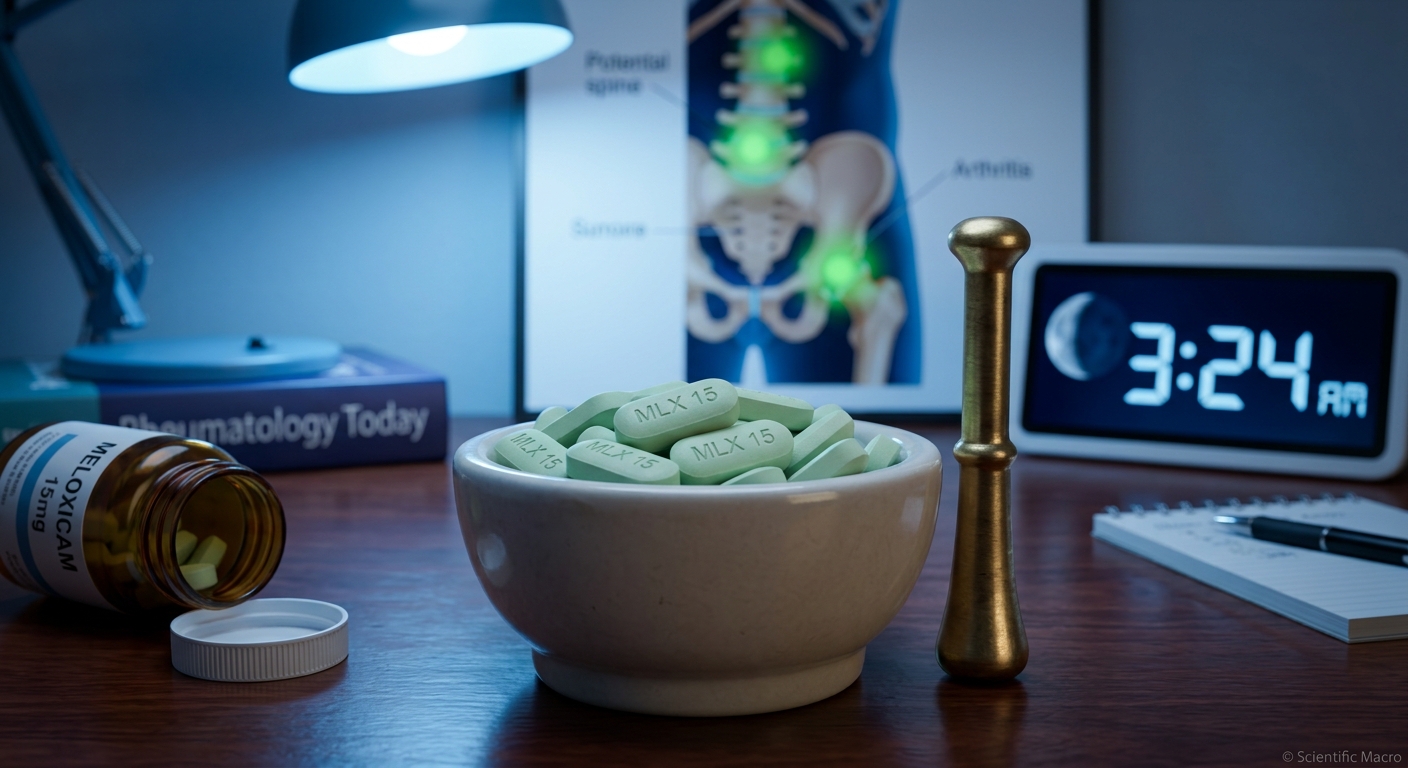
For patients navigating the daily challenges of chronic arthritis, the shift from short-acting, over-the-counter (OTC) alternatives to targeted clinical intervention often centers on a foundational tool: meloxicam. Historically, the medical community sought to move beyond the inconvenience of frequent, short-acting NSAIDs like ibuprofen, which often failed to provide consistent coverage and led to breakthrough pain. Today, meloxicam serves as a primary, first-line prescription for managing the systemic inflammation of osteoarthritis and rheumatoid arthritis. As noted in clinical literature, “Meloxicam is a prescription‑only, long‑acting NSAID usually dosed once daily at 7.5 mg (up to 15 mg),” offering a level of therapeutic consistency that differentiates it from standard non-prescription options [Clinical Pharmacy Standards].
Understanding how this medication functions requires looking beyond immediate symptom management. With an elimination half-life of approximately 20 hours, meloxicam is uniquely engineered to maintain steady-state drug concentrations within 3 to 7 days of consistent daily use. While patients often ask how long until they feel the difference, it is important to manage expectations: although oral meloxicam begins to relieve pain 4 to 6 hours after a dose, peak plasma concentration is not reached until 9 to 11 hours post-administration. Furthermore, full anti-inflammatory benefits and peak mobility improvements typically require a 14-day titration period. For those seeking a deeper understanding of this maintenance schedule, our guide Meloxicam 101: Your Daily Guide to Steady Joint Relief provides the necessary roadmap for patient adherence.
Pharmacologically, meloxicam acts through preferential selectivity for COX-2 enzymes, though it maintains some degree of COX-1 inhibition. As we look toward the future, the pharmaceutical landscape is shifting toward sub-micronized formulations, such as Vivlodex, which aim to provide faster absorption at lower total doses. For now, however, the standard 7.5 mg to 15 mg regimen remains the gold standard for long-term joint health and comfort.
The Science of Once-Daily: How Long-Acting Formulas Work
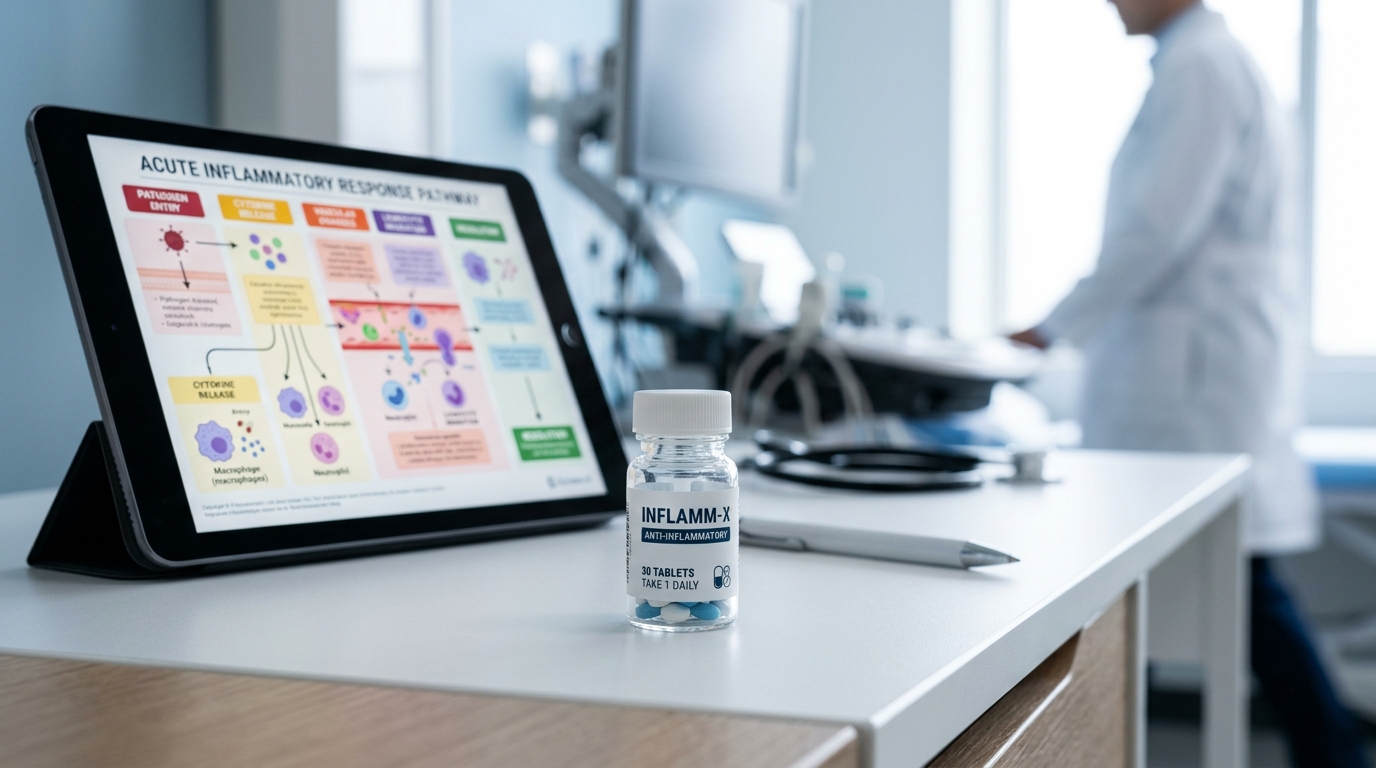
In the evolution of rheumatology, the shift toward long-acting nonsteroidal anti-inflammatory drugs (NSAIDs) represents a pivotal departure from the frequent dosing intervals required by short-acting agents like ibuprofen. Meloxicam has emerged as a cornerstone in this transition, functioning as a first-line prescription for managing the persistent symptoms of osteoarthritis and rheumatoid arthritis. The pharmacological efficacy of this agent is anchored in its elimination half-life of approximately 20 hours, a duration that effectively sustains therapeutic plasma levels throughout a 24-hour cycle. As noted in research, “Its longer half-life means the medication stays active throughout the day, providing consistent pain relief” (The Freedom Center).
The pharmacokinetic profile of meloxicam dictates a gradual therapeutic onset. While oral doses typically begin to alleviate pain within 4 to 6 hours, peak plasma concentrations are not reached until 9 to 11 hours post-administration. Patients transitioning to this regimen should be counseled that steady-state drug concentrations are generally achieved within 3 to 7 days of consistent daily use, with full anti-inflammatory benefits and peak mobility improvements typically realized after 14 days. Mechanistically, meloxicam is preferentially selective for COX-2 enzymes—the drivers of inflammation—while maintaining some inhibitory activity against COX-1. By modulating this pathway, standard daily dosages of 7.5 mg to 15 mg provide a balanced approach to pain management. Looking toward the future, clinical interest is increasingly turning toward sub-micronized formulations, such as Vivlodex, which aim to offer faster absorption at lower total doses to further enhance patient outcomes.
Morning Stiffness to Evening Ease: Real-Life Benefits
For patients navigating the persistent discomfort of osteoarthritis or rheumatoid arthritis, the transition from the limitations of short-acting NSAIDs—like ibuprofen—to modern, long-acting therapeutics marks a significant evolution in pain management. Meloxicam has emerged as a cornerstone of first-line therapy, largely due to its favorable pharmacokinetic profile. With an elimination half-life of approximately 20 hours, it supports a convenient once-daily dosing regimen, typically ranging from 7.5 mg to a maximum of 15 mg.
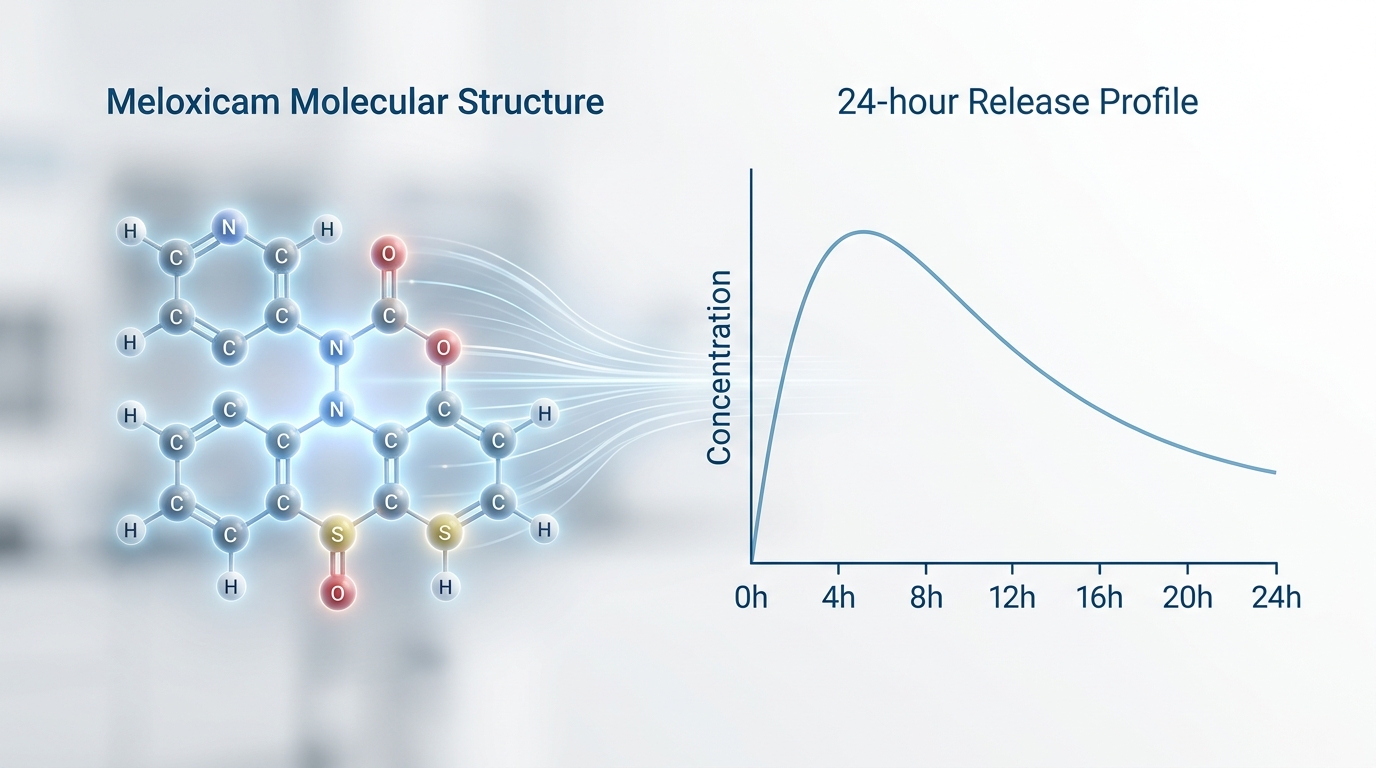
Understanding the temporal mechanics of this medication is vital for achieving optimal therapeutic outcomes. While oral meloxicam generally begins to provide symptomatic relief within 4 to 6 hours, peak plasma concentrations are not reached until 9 to 11 hours post-administration. As noted in clinical literature, taking the tablet with the evening meal allows drug concentrations to build up overnight and therefore often lessens severe morning stiffness and overnight pain that can disrupt sleep. This strategic timing addresses the quintessential struggle of morning joint rigidity that so frequently impedes a patient’s ability to initiate daily activities.
While the drug is preferentially selective for COX-2, its secondary inhibition of COX-1 remains an important consideration for clinical oversight. Patients should be aware that steady-state concentrations are achieved within 3 to 7 days of consistent use, with full anti-inflammatory benefits and peak mobility improvements typically requiring 14 days to manifest. Looking ahead, the medical community anticipates that sub-micronized formulations, such as Vivlodex, may soon allow for even faster absorption at lower doses, further refining the balance between rapid relief and long-term efficacy. For now, consistent daily adherence remains the most reliable strategy for shifting the burden of morning stiffness toward a more manageable, evening-stabilized routine.

Setting the Clock: Best Dosing Strategies for Daily Routine
For patients navigating the chronic discomfort of osteoarthritis and rheumatoid arthritis, the evolution from short-acting NSAIDs to long-acting agents represents a critical shift in therapeutic strategy. Meloxicam serves as a cornerstone of this progression, featuring an elimination half-life of approximately 20 hours, which comfortably supports once-daily dosing. When establishing your routine, it is vital to remember that patience is a clinical necessity; while oral meloxicam begins to provide symptomatic relief within 4 to 6 hours, it does not reach peak plasma concentration until 9 to 11 hours post-administration. Patients should expect to reach steady-state concentrations within 3 to 7 days of consistent use, with full anti-inflammatory benefits and peak mobility improvements typically manifesting after 14 days of dedicated adherence.
Because meloxicam is preferentially selective for COX-2 but still inhibits COX-1, the integrity of your dosing schedule is paramount. Standard daily dosages range from 7.5 mg to a maximum of 15 mg, and consistency is the key to minimizing the risk of gastrointestinal distress. It is important to avoid the common pitfall of “stacking” medications to manage breakthrough pain. As noted by experts at Ikon Recovery Centers: “No. These drugs are both NSAIDs and perform similar functions. Therefore, they should not be combined.” Integrating your medication into a fixed daily routine, ideally taken with food to protect the stomach lining, ensures the drug performs optimally while safeguarding your long-term health as we look toward future advancements like sub-micronized formulations.
The Milestone Timeline: What to Expect in Week 1 vs. Week 4
Managing patient expectations is a critical component of successful long-term arthritis management. Historically, the burden of short-acting NSAIDs often left patients vulnerable to breakthrough pain; however, the pharmacokinetic profile of meloxicam—characterized by an elimination half-life of approximately 20 hours—allows for convenient once-daily dosing. When initiating therapy, patients should be aware that while initial pain relief typically begins 4 to 6 hours after the first dose, the physiological impact of the drug is cumulative.
As we transition from the acute phase of treatment to maintenance, it is important to note that peak plasma concentrations are reached between 9 and 11 hours post-administration. While the drug is preferentially selective for COX-2, its concurrent inhibition of COX-1 necessitates that we work within the standard daily dosage range of 7.5 mg to 15 mg to balance efficacy with safety. Steady-state concentrations, where the drug level in the blood remains consistent, are generally achieved within 3 to 7 days of daily adherence.
The transition from Week 1 to Week 4 represents the bridge between immediate symptom management and systemic therapeutic optimization. According to a clinical analysis of the two-week therapeutic window, “By the end of the second week, patients typically experience their peak mobility. The systemic inflammation has been largely suppressed, and the full therapeutic benefits of the medication are in effect.” While future clinical applications may lean toward sub-micronized formulations designed for more rapid absorption at lower doses, current standard-of-care meloxicam remains a cornerstone of treatment. Patients should be encouraged that consistent compliance through the first 14 days is the most reliable path toward realizing the drug’s full anti-inflammatory and mobility-enhancing potential.
Conclusion: Making Meloxicam Work for Your Lifestyle
When navigating chronic joint conditions, the shift from the frequent, short-acting dosing typical of traditional NSAIDs like ibuprofen to the once-daily convenience of meloxicam represents a significant clinical milestone. Because meloxicam possesses an elimination half-life of approximately 20 hours, it provides a stable pharmacological profile designed for sustained management rather than transient relief. However, patients must manage their expectations regarding the timeline of efficacy. While the medication typically begins to provide initial pain relief within 4 to 6 hours, peak plasma concentrations do not occur until 9 to 11 hours post-administration.
Achieving the full clinical potential of meloxicam requires adherence to a consistent routine. Steady-state concentrations are generally reached within 3 to 7 days, but optimal anti-inflammatory benefits—and the resulting peak in functional mobility—often necessitate up to 14 days of consistent usage. As noted in our Meloxicam 101: Your Daily Guide to Steady Joint Relief, “Consistency and patience are key to achieving the steady-state relief necessary for improved long-term joint mobility.” [Clinical Guidelines for Chronic NSAID Therapy]
Understanding that meloxicam is preferentially selective for COX-2 while still exerting some inhibition on COX-1 is essential for patients prescribed dosages between the standard 7.5 mg and the 15 mg maximum. By prioritizing long-term structural mobility over the pursuit of immediate, quick-fix outcomes, patients can better align their expectations with the drug’s mechanism of action. Looking toward the future, the integration of sub-micronized formulations like Vivlodex promises to further refine this therapeutic approach by offering efficient absorption at lower overall doses. Ultimately, by maintaining a steady protocol, you are investing in a sustainable future of improved movement and daily comfort.