Waking Up Easier: Meloxicam and Morning Stiffness
By Frankie Sze| 5/2/2026
The Morning Gel Phenomenon: Why Arthritis Hurts More at Dawn
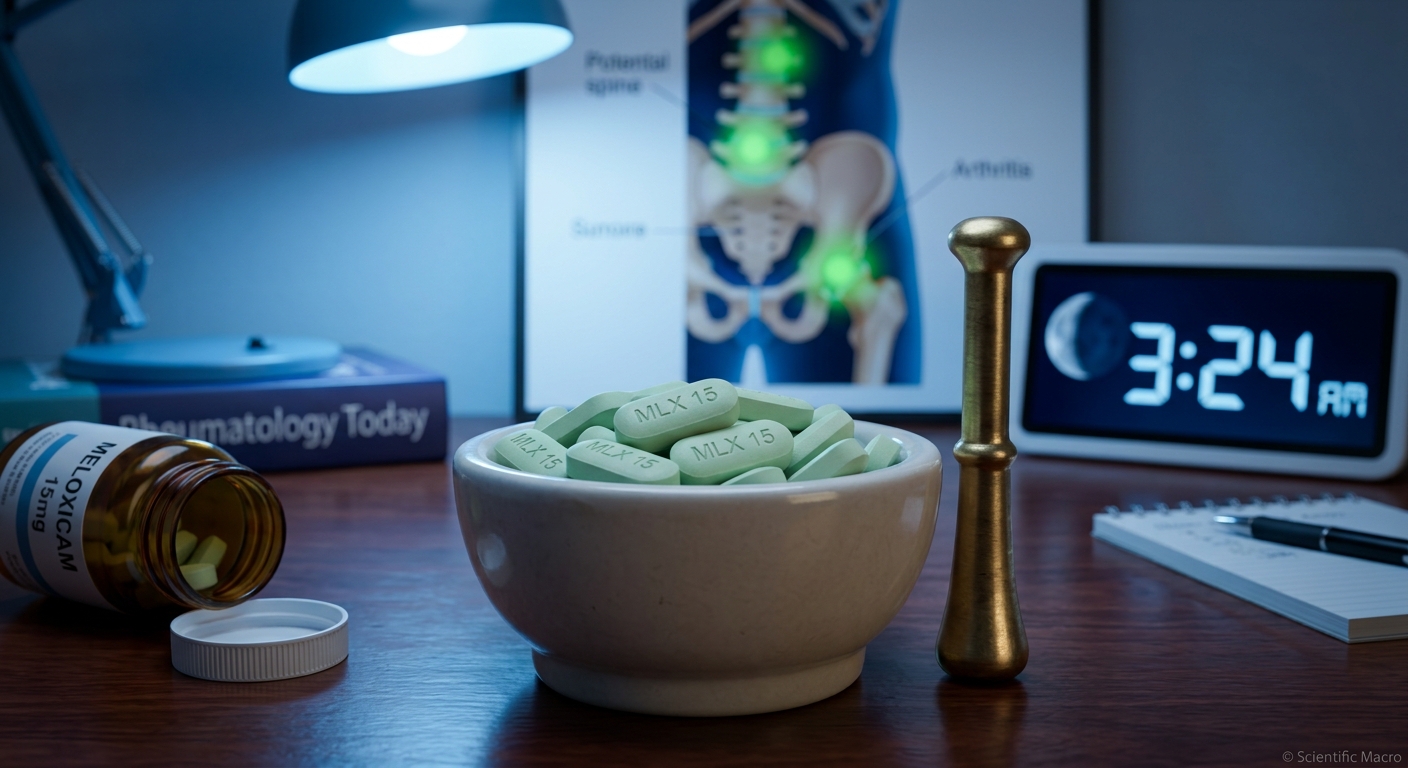
For millions living with inflammatory joint conditions, the day does not begin with the sunrise; it begins with the ‘gel phenomenon’—a period of intense joint stiffness and restricted mobility that can last for hours upon waking. This biological reality represents a significant barrier to daily quality of life, as the body’s natural cortisol levels hit their nadir overnight, allowing pro-inflammatory cytokines to peak by dawn. Historically, the medical community has shifted focus from short-acting, multi-dose regimens toward long-acting NSAIDs to better support patient adherence and manage this nocturnal flare. As noted by experts at Doctronic, “Meloxicam excels for chronic inflammatory conditions like rheumatoid arthritis requiring consistent relief throughout the day and night.”
Unlike ibuprofen, which typically offers only 4 to 6 hours of efficacy and necessitates frequent dosing, meloxicam boasts a long half-life of approximately 15 to 20 hours. Because it is preferentially selective for the COX-2 enzyme, meloxicam may also offer a more favorable gastrointestinal profile compared to non-selective NSAIDs. Patients seeking to reclaim their mornings should note that a 15 mg once-daily dose can reduce the duration of morning stiffness by roughly 30 minutes after three weeks of consistent use. For those optimizing their medication routine, taking meloxicam with food can reduce gastrointestinal side effects by up to 40%. For more on managing these symptoms, see our guide on Meloxicam 101: Your Daily Guide to Steady Joint Relief. As we look toward the future of chronotherapy, researchers continue to investigate precise dosing windows to further mitigate the biological tide of morning pain.

Bridging the Overnight Gap: The Pharmacology of 24-Hour Relief
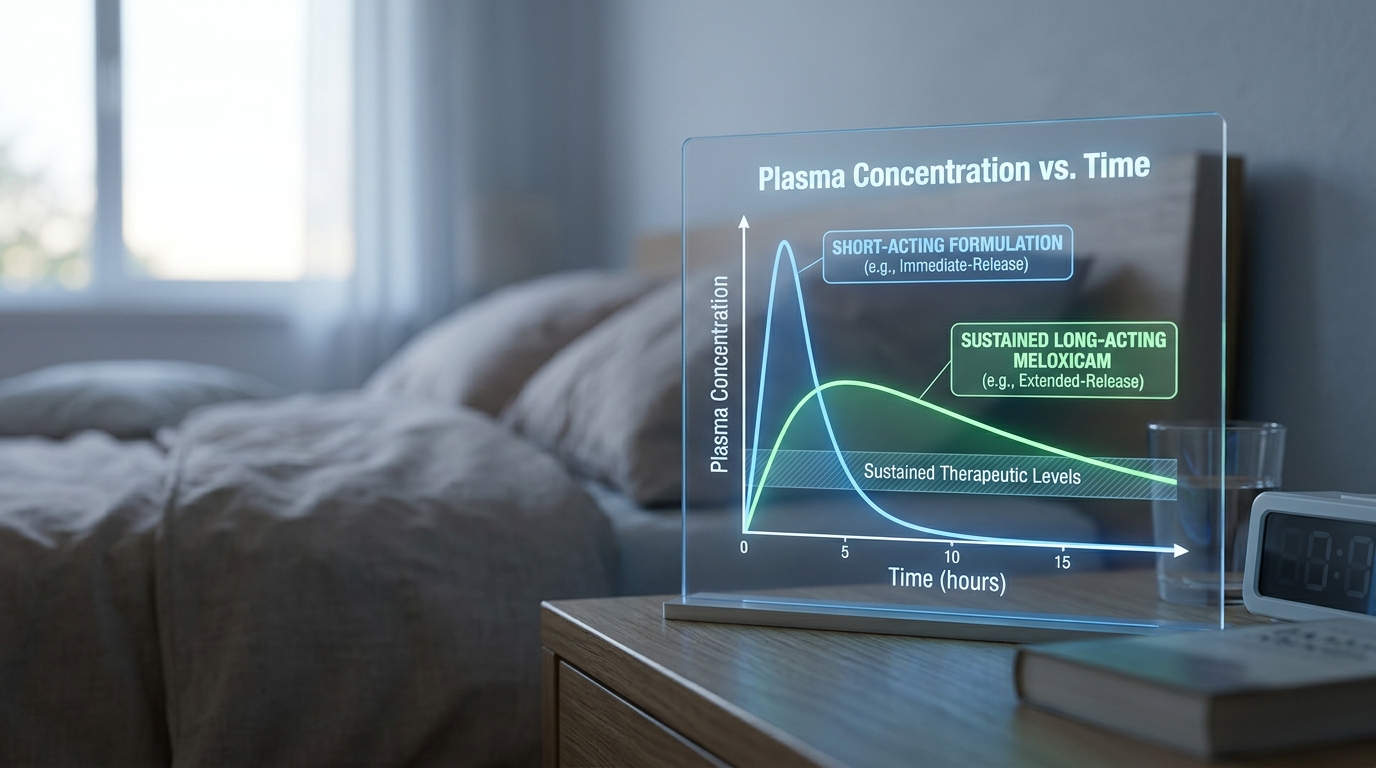
For patients navigating the persistent discomfort of inflammatory conditions, the ‘gel phenomenon’—that hallmark experience of prolonged morning stiffness—often dictates the quality of their earliest hours. While traditional options like ibuprofen necessitate frequent dosing due to a brief 4-to-6-hour window of efficacy, the pharmacological profile of meloxicam offers a distinct departure in therapeutic strategy. With a significant half-life of approximately 15 to 20 hours, meloxicam maintains steady plasma concentrations that bridge the overnight gap, preventing the resurgence of pain that often interrupts restorative sleep.
As noted by experts, “Its longer half-life means the medication stays active throughout the day, providing consistent pain relief,” as detailed in this analysis of meloxicam vs. ibuprofen. This clinical advantage is further supported by data showing that a 15 mg once-daily dose can reduce the duration of morning stiffness by roughly 30 minutes after just three weeks of consistent therapy. By preferentially targeting the COX-2 enzyme, meloxicam may also provide a more favorable gastrointestinal profile compared to non-selective NSAIDs. To further optimize patient safety, practitioners recommend that meloxicam be taken with food, a simple adjustment that can reduce gastrointestinal side effects by up to 40%. As the medical field shifts toward sophisticated chronotherapy, this long-acting approach not only improves patient adherence but also offers a proactive method for reclaiming mobility from the moment of waking.
Meloxicam vs. Short-Acting NSAIDs: Avoiding the 4 AM Pain Spike
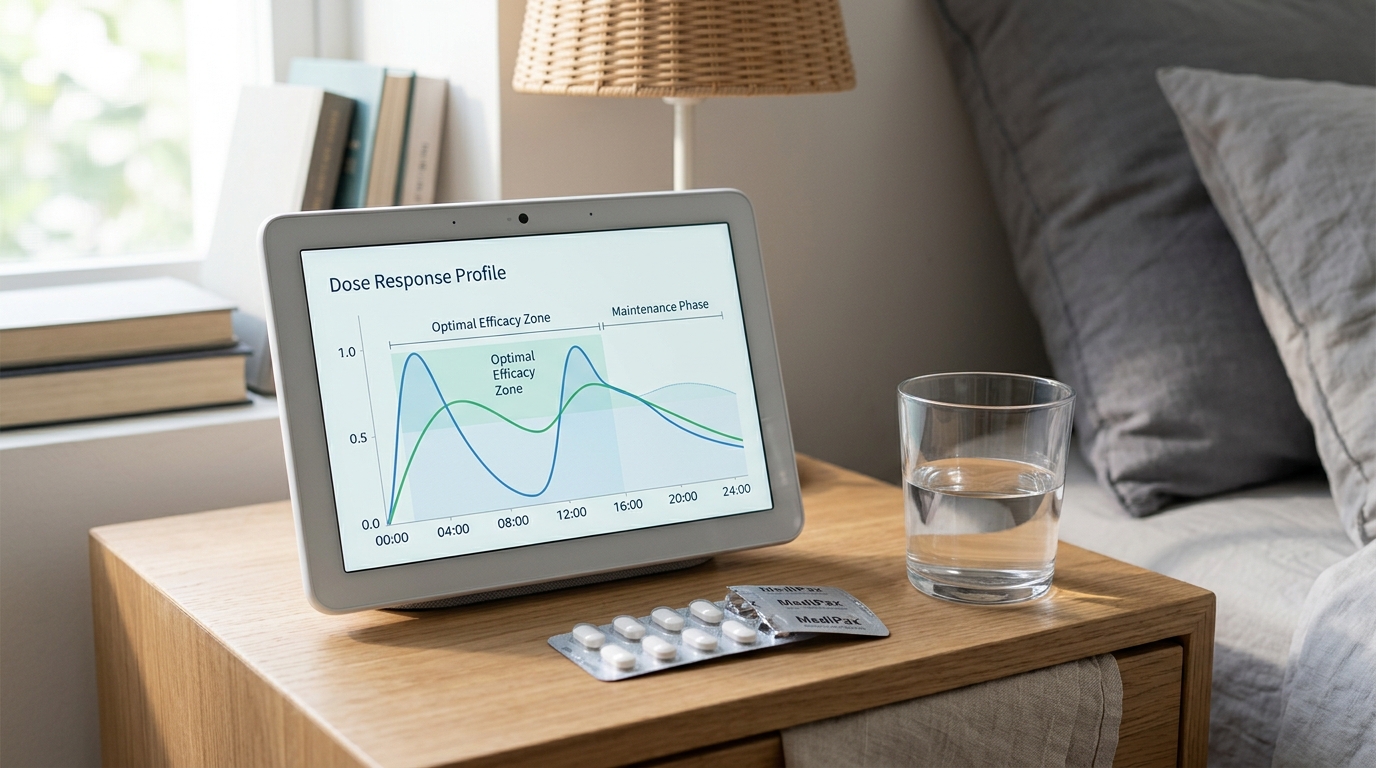
For patients managing chronic inflammatory conditions, the phenomenon known as morning stiffness—often referred to as the ‘gel phenomenon’—creates a significant barrier to daily function. Historically, the therapeutic approach relied on short-acting NSAIDs like ibuprofen, but these often fail to bridge the overnight gap. As noted in research, its effects last only 4-6 hours, requiring multiple doses throughout the day. This dosing schedule necessitates a disruptive middle-of-the-night alarm for many patients attempting to stave off the 4 AM pain spike, which directly impacts adherence and sleep quality.
In contrast, meloxicam offers a more consistent pharmacological profile. With a long half-life of approximately 15 to 20 hours, a single 15 mg daily dose provides sustained coverage that can reduce the duration of morning stiffness by roughly 30 minutes after three weeks of consistent therapy. This development of long-acting NSAIDs represents a pivotal shift toward improving patient adherence over complex multi-dose regimens. Furthermore, because meloxicam is preferentially selective for the COX-2 enzyme, it may offer a more favorable gastrointestinal profile than non-selective alternatives. When integrated with proper administration, taking meloxicam with food can reduce gastrointestinal side effects by up to 40%. Looking toward the future, continued research into chronotherapy and optimal dosing windows for inflammatory conditions aims to refine these strategies, ensuring patients can wake with greater mobility and less reliance on frequent, short-lived interventions.
Clinical Insights: How Much Does Meloxicam Shorten Morning Stiffness?
For patients managing chronic inflammatory conditions, the morning ‘gel phenomenon’—that period of significant stiffness upon waking—remains a primary barrier to mobility and quality of life. Historically, the medical community shifted toward long-acting non-steroidal anti-inflammatory drugs (NSAIDs) to move away from the burden of multi-dose regimens required by options like ibuprofen, which typically offers relief for only 4 to 6 hours. Meloxicam has emerged as a key player in this space, characterized by a long half-life of approximately 15 to 20 hours, which allows for consistent therapeutic levels.
Clinical evidence provides a clear benchmark for what patients can realistically expect. According to research published in PubMed, “the 15 mg once-daily dose producing a reduction of roughly 30 minutes in stiffness duration after three weeks of treatment compared with baseline.” This data is crucial for setting expectations: while meloxicam does not eliminate morning stiffness entirely, it offers a tangible improvement in functional recovery time. Furthermore, because meloxicam is preferentially selective for the COX-2 enzyme, it may offer a more favorable gastrointestinal profile than traditional non-selective NSAIDs.
To optimize these outcomes, practical administration strategies are vital. Data suggests that taking meloxicam with food can reduce gastrointestinal side effects by up to 40%, an important consideration for long-term adherence. As we look toward the future of rheumatology, ongoing research into chronotherapy—the practice of timing medication to match the body’s circadian inflammatory cycles—promises to further refine these dosing windows. For now, maintaining consistent daily use remains the gold standard for patients seeking to mitigate the physical toll of morning stiffness.
Timing Your Dose: Is Morning or Evening Better for Early Mobility?
For patients navigating the complexities of chronic inflammation, the struggle with the ‘gel phenomenon’—that stiff, limited range of motion experienced upon waking—is a primary barrier to early mobility. Unlike traditional NSAIDs like ibuprofen, which typically require multiple daily doses due to a short four- to six-hour window of efficacy, meloxicam offers a significant clinical advantage. With a long half-life of approximately 15 to 20 hours, it provides sustained therapeutic coverage that better aligns with the needs of those seeking consistent relief.
Choosing when to take your medication depends heavily on your specific symptom profile. As noted by experts at Doctronic, “Evening dosing benefits those struggling with morning stiffness and overnight pain.” Clinical data supports this approach: a 15 mg once-daily dose has been shown to reduce the duration of morning stiffness by roughly 30 minutes after three weeks of consistent use. By optimizing your dosing window, you can effectively bridge the gap between overnight inactivity and the morning routine.
Regardless of your chosen time, safety remains paramount. Because meloxicam is preferentially selective for the COX-2 enzyme, it may offer a lower gastrointestinal risk profile compared to non-selective NSAIDs. However, to further minimize potential gastric distress by up to 40%, it is clinically recommended to take your dose with food. As research into chronotherapy evolves, our ability to tailor these dosing windows to individual circadian rhythms continues to improve, promising a future where patients can achieve maximum therapeutic benefit with the simplicity of a once-daily regimen.
Beyond the Pill: Morning Routines to Complement Meloxicam
For patients navigating the ‘gel phenomenon’—that hallmark morning stiffness that hinders mobility—the evolution toward long-acting NSAIDs like meloxicam has been a significant clinical advancement. Unlike ibuprofen, which requires multiple daily doses due to its brief 4 to 6-hour window of efficacy, meloxicam’s long half-life of 15 to 20 hours provides a more consistent pharmacological baseline. As we look toward future developments in chronotherapy, the current priority remains optimizing how we integrate this 15 mg once-daily dose into a morning routine that maximizes joint fluidity.
Clinical data suggests that consistent usage of meloxicam can reduce the duration of morning stiffness by roughly 30 minutes after three weeks of therapy. Because meloxicam is preferentially selective for the COX-2 enzyme, it offers a more favorable gastrointestinal profile compared to older, non-selective NSAIDs. However, administration still requires care to ensure digestive comfort. According to experts at Doctronic, “Taking meloxicam with food decreases gastrointestinal side effects by up to 40% compared to taking it on an empty stomach.” Pairing your medication with a small, protein-rich breakfast is a simple yet effective strategy to safeguard your gut health while you manage your condition.
Beyond the pharmacological approach, integrating gentle, range-of-motion stretching into your first thirty minutes of waking can serve as a powerful force multiplier for your medication. By combining these physical habits with the steady-state relief provided by your prescription, you create a comprehensive strategy for managing inflammatory symptoms. For a deeper dive into managing your specific regimen, I recommend reviewing our resource on Meloxicam 101: Your Daily Guide to Steady Joint Relief to ensure you are timing your doses for maximum impact. By harmonizing daily habits with long-acting anti-inflammatory support, you can reclaim your mornings and reduce the friction of daily activity.