Can You Take Ibuprofen or Naproxen With Meloxicam?
By Frankie Sze | 5/2/2026
The Multi-NSAID Mistake: Why One + One Does Not Equal Better Relief
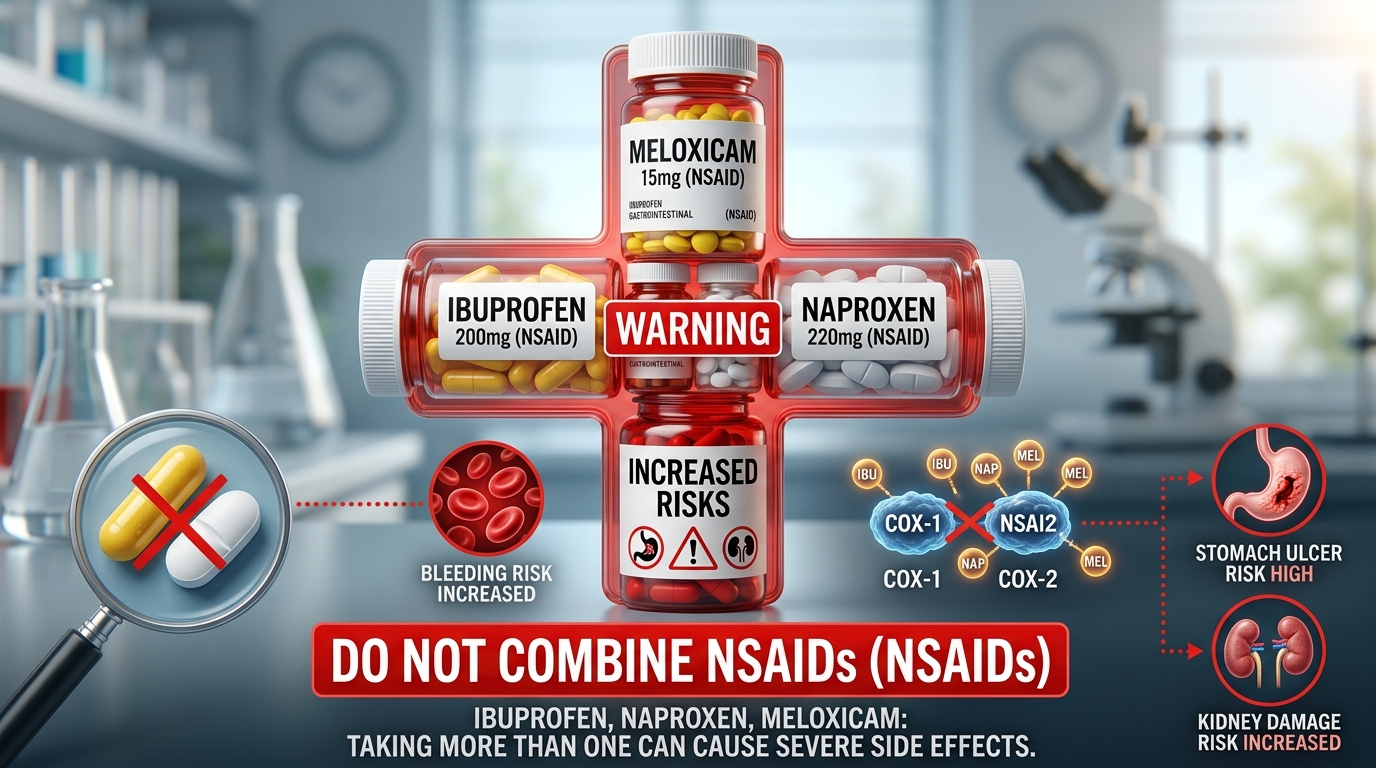
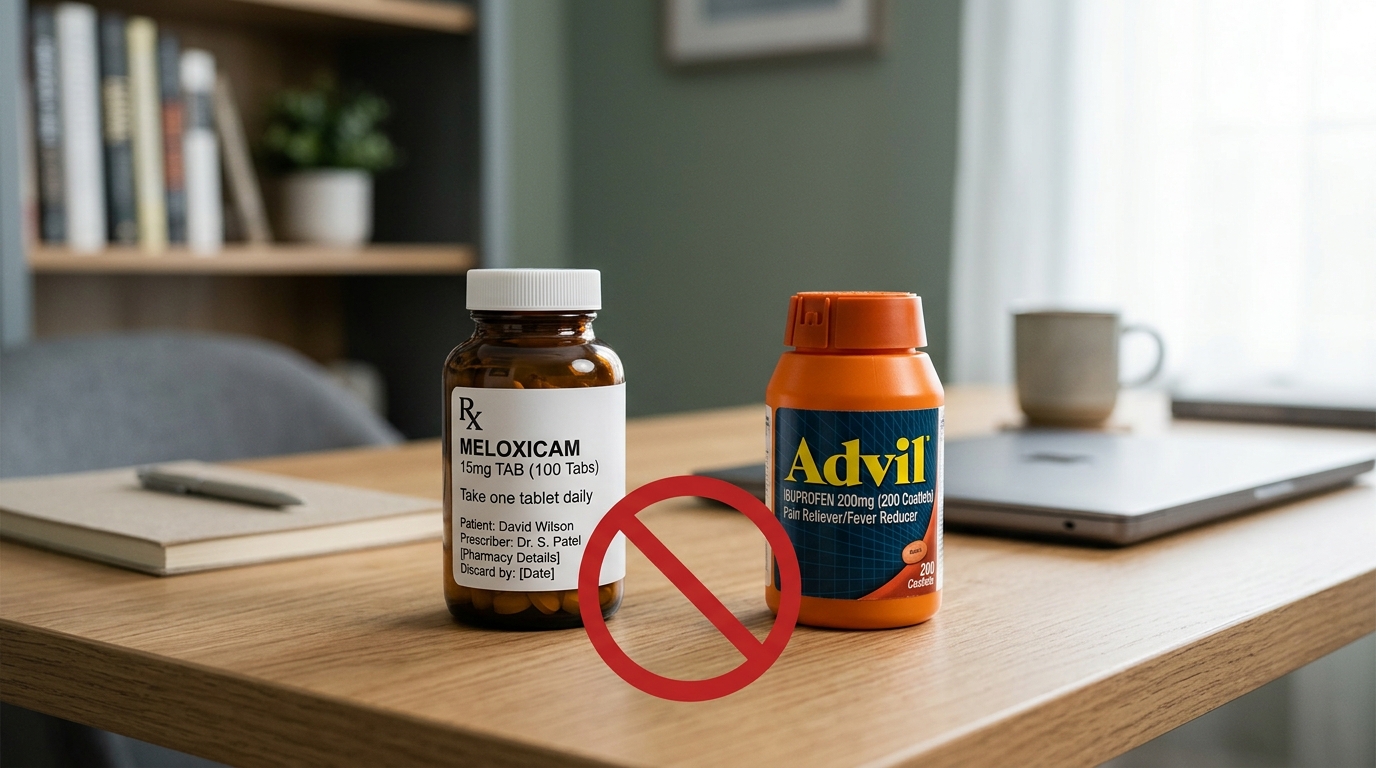
When managing chronic arthritis pain, the line between relief and harm is often thinner than patients realize. Since the FDA approved meloxicam in 2000 as a long-acting alternative to multiple-daily-dose NSAIDs like ibuprofen, it has become a staple for steady, once-daily management. However, many patients suffering from ‘breakthrough’ pain mistakenly attempt to ‘boost’ their 7.5 mg to 15 mg meloxicam dose by layering it with over-the-counter ibuprofen, taken every four to six hours at 200 mg to 400 mg. This practice is medically contraindicated, as these agents share the same pharmacological pathway.
As noted by experts at Ikon Recovery Centers, “No. These drugs are both NSAIDs and perform similar functions. Therefore, they should not be combined.” Instead of providing superior pain control, this layering creates a dangerous additive effect. Combining two NSAIDs increases the relative risk of upper gastrointestinal bleeding to roughly 6-8 times that of non-users. For those looking to understand how to optimize their treatment safely, Meloxicam 101: Your Daily Guide to Steady Joint Relief provides the essential framework for maintaining efficacy without the compounding risks of polypharmacy.
The consequences of this ‘more is better’ mindset can be severe. Acute NSAID toxicity can manifest as nausea, vomiting, epigastric pain, and in serious cases, respiratory compromise. For patients transitioning between therapies, clinicians now recommend a washout period of 24 hours to ensure systemic clearance. Fortunately, the future of pain management is shifting toward safer, multimodal approaches. Clinicians are increasingly emphasizing combinations that pair NSAIDs with non-NSAID options like acetaminophen, which works through different mechanisms and lacks anti-inflammatory properties, providing a safer profile for those still experiencing intermittent symptoms.
Shared Chemistry: Understanding the NSAID Family Tree
At the biochemical level, the therapeutic efficacy of non-steroidal anti-inflammatory drugs (NSAIDs) is rooted in their ability to inhibit cyclooxygenase (COX) enzymes. As noted by Doctronic AI, “Both medications reduce inflammation by blocking cyclooxygenase enzymes that produce prostaglandins, the compounds responsible for pain, swelling, and fever.” While ibuprofen acts as a non-selective inhibitor, requiring frequent administration every 4-6 hours at doses of 200-400 mg to maintain therapeutic levels, meloxicam functions with higher selectivity for the COX-2 isoenzyme. Since the FDA approved meloxicam in 2000 as a long-acting alternative, its once-daily dosing (7.5 mg to 15 mg) has provided a more stable pharmacological profile for chronic pain management.
However, a clinical concern persists when patients attempt to treat ‘breakthrough’ arthritis pain by stacking these medications. Combining two NSAIDs does not provide a synergistic analgesic benefit; instead, it compounds the risk of gastrointestinal toxicity, raising the relative risk of upper GI bleeding to roughly 6-8 times that of non-users. Clinicians are increasingly emphasizing multimodal pain management that pairs NSAIDs with non-NSAID options like acetaminophen—which operates through a different mechanism and lacks systemic anti-inflammatory activity—to mitigate these dangers. For patients transitioning between therapies, a 24-hour washout period is recommended to ensure the safe clearance of ibuprofen before initiating meloxicam. Vigilance remains essential, as acute NSAID toxicity can manifest rapidly, with symptoms including nausea, vomiting, epigastric pain, and potential respiratory compromise.

The ‘Double-Dose’ Hazard: Additive Damage to the Stomach and Kidneys
While the FDA approved meloxicam in 2000 as a long-acting, once-daily alternative to short-acting NSAIDs like ibuprofen, many patients continue to struggle with breakthrough arthritis pain. A dangerous and frequent occurrence in clinical practice involves patients attempting to self-manage this discomfort by supplementing their 7.5 mg or 15 mg meloxicam dose with over-the-counter ibuprofen, typically taken every four to six hours. This practice creates a perilous pharmacological overlap that carries severe systemic risks. As noted by experts, “Because both medications are NSAIDs, taking them together increases the risk of side effects, such as stomach ulcers, gastrointestinal bleeding, or kidney damage.”
The quantitative impact of this combination is stark, with data indicating that concurrent use of two NSAIDs elevates the relative risk of upper gastrointestinal bleeding to roughly 6-8 times that of non-users. Beyond mucosal erosion, the cumulative stress on renal filtration can lead to acute NSAID toxicity, characterized by symptoms such as nausea, vomiting, epigastric pain, and potential respiratory compromise. For high-risk patients transitioning between these therapies, a washout period of 24 hours is essential to mitigate toxicity. To avoid these hazards, clinicians are increasingly emphasizing multimodal pain management, prioritizing pairings like acetaminophen—which, unlike NSAIDs, works through different mechanisms and does not exert anti-inflammatory effects—to safely manage pain without stacking the dangerous burden of dual-NSAID exposure.

Switching Protocols: How Long to Wait Between Different Pain Meds
When navigating the transition between different non-steroidal anti-inflammatory drugs (NSAIDs), clinical caution is paramount. The FDA approved meloxicam in 2000 as a long-acting alternative to medications like ibuprofen, which typically requires dosing every 4-6 hours at 200-400 mg. However, patients often struggle with breakthrough arthritis pain and may be tempted to add over-the-counter ibuprofen to their existing 7.5 mg to 15 mg daily meloxicam regimen. This is a critical error: combining two NSAIDs significantly increases the relative risk of upper gastrointestinal bleeding to roughly 6-8 times that of non-users, and can lead to acute NSAID toxicity characterized by nausea, vomiting, epigastric pain, and respiratory compromise.
To mitigate these risks, a structured washout period is essential when rotating therapies. As noted in prescribing guidelines, “Many prescribing guidelines, however, recommend a more conservative washout of 24 hours (one day) to ensure complete elimination and to reduce the risk of overlapping NSAID exposure.” This 24-hour buffer is particularly vital for high-risk populations. Moving forward, clinicians are increasingly emphasizing multimodal pain management; by pairing NSAIDs with non-NSAID options like acetaminophen—which is safe to use with meloxicam because it functions through different mechanisms and lacks anti-inflammatory properties—patients can manage pain more effectively without compounding the systemic risks associated with overlapping NSAID exposure.
Safe Combinations: What You Can Actually Take for Breakthrough Pain
Since the FDA approved meloxicam in 2000 as a long-acting alternative to multiple-daily-dose NSAIDs, many patients have grown accustomed to its 7.5 mg to 15 mg once-daily regimen. However, when breakthrough arthritis pain strikes, the impulse to reach for over-the-counter ibuprofen—typically dosed at 200-400 mg every 4-6 hours—is a common but dangerous mistake. Combining two NSAIDs creates a synergistic toxicity, elevating the relative risk of upper GI bleeding to roughly 6-8 times that of non-users. Patients attempting such a mix face the acute danger of NSAID toxicity, characterized by symptoms like severe nausea, vomiting, epigastric pain, and in extreme cases, respiratory compromise. If your physician has determined a need to transition from ibuprofen to meloxicam, a washout period of 24 hours is standard practice to mitigate these risks.
The current standard in pain management focuses on multimodal approaches that prioritize safety over polypharmacy. For breakthrough relief, clinical guidance increasingly directs patients toward acetaminophen, which functions through entirely different mechanisms than meloxicam and lacks the compounding anti-inflammatory risks of combining multiple NSAIDs. As noted by experts, “Yes, you can generally take meloxicam and Tylenol (acetaminophen) together safely. These medications work through different mechanisms and don’t typically interact with each other,” according to Doctronic. By utilizing this non-NSAID option, patients can manage pain spikes effectively while minimizing the gastrointestinal and systemic threats inherent in stacking anti-inflammatory medications.
Accidental Co-ingestion: Emergency Signs and Immediate Actions
While meloxicam was approved in 2000 as a long-acting alternative to multiple-daily-dose NSAIDs like ibuprofen, patients frequently attempt to treat ‘breakthrough’ arthritis pain by adding OTC ibuprofen—usually dosed at 200-400 mg every 4-6 hours—to their daily 7.5 mg to 15 mg meloxicam regimen. This practice is dangerous, as combining two NSAIDs increases the relative risk of upper gastrointestinal bleeding to roughly 6-8 times that of non-users. As highlighted in FDA prescribing information, “NSAIDs cause an increased risk of serious gastrointestinal adverse events including bleeding, ulceration, and perforation of the stomach or intestines, which can be fatal. These events can occur at any time during use and without warning symptoms.”
Acute NSAID toxicity symptoms often manifest as nausea, persistent vomiting, epigastric pain, and in severe cases, respiratory compromise. If you suspect an accidental co-ingestion, seek emergency medical care immediately. For those planning to transition medications, a washout period of 24 hours is recommended for high-risk patients switching from ibuprofen to meloxicam. Clinicians are now emphasizing multimodal pain management to mitigate these risks, often pairing NSAIDs with non-NSAID options like acetaminophen, which works through different mechanisms and does not carry the same anti-inflammatory toxicity profile. For more guidance on maintaining a safe medication schedule, consult our resource on Meloxicam 101: Your Daily Guide to Steady Joint Relief to ensure you are managing your joint health effectively without compromising your safety.