
The “Painkiller Paradox”: Could Taking Meloxicam Actually Be Masking a Much Worse Underlying Injury?
Imagine driving down the highway when suddenly, your car’s check engine light starts flashing violently. The engine is sputtering, heat is rising, and disaster is imminent. But instead of pulling over to diagnose the issue, you simply reach under the dashboard and snip the wire to the flashing light. Problem solved, right? The annoying light is gone—but the engine is still fundamentally broken.
This exact scenario plays out inside your body every single day when you rely entirely on masking pain with NSAIDs (Non-Steroidal Anti-Inflammatory Drugs) like Meloxicam to get through your routine. It is what orthopedic specialists call the “Painkiller Paradox.” The pills successfully turn off your body’s alarm system, but they do absolutely nothing to fix the crumbling house.
If you have been utilizing these medications as a long-term crutch to avoid surgery or skip out on physical therapy, it is time for a tough-love reality check. The pain may be temporarily silenced, but beneath the surface, the mechanical damage is silently multiplying.
The Chemical Illusion: What Meloxicam Actually Does to Your Joints
When you swallow a pill like Meloxicam, you are not sending a construction crew to repair your joints. You are sending a chemical messenger to block your brain from receiving SOS signals.
Meloxicam belongs to a class of drugs that inhibit specific enzymes (COX-1 and COX-2) responsible for producing prostaglandins, which trigger inflammation and pain. The crucial fact is this: Meloxicam only chemically alters your pain perception. It does absolutely nothing to repair torn cartilage, heal damaged ligaments, or prevent the bone-on-bone friction causing the inflammation in the first place.
- It hides the symptom: You feel better and experience increased mobility.
- It ignores the source: The structural deficit in your joint remains entirely unchanged.
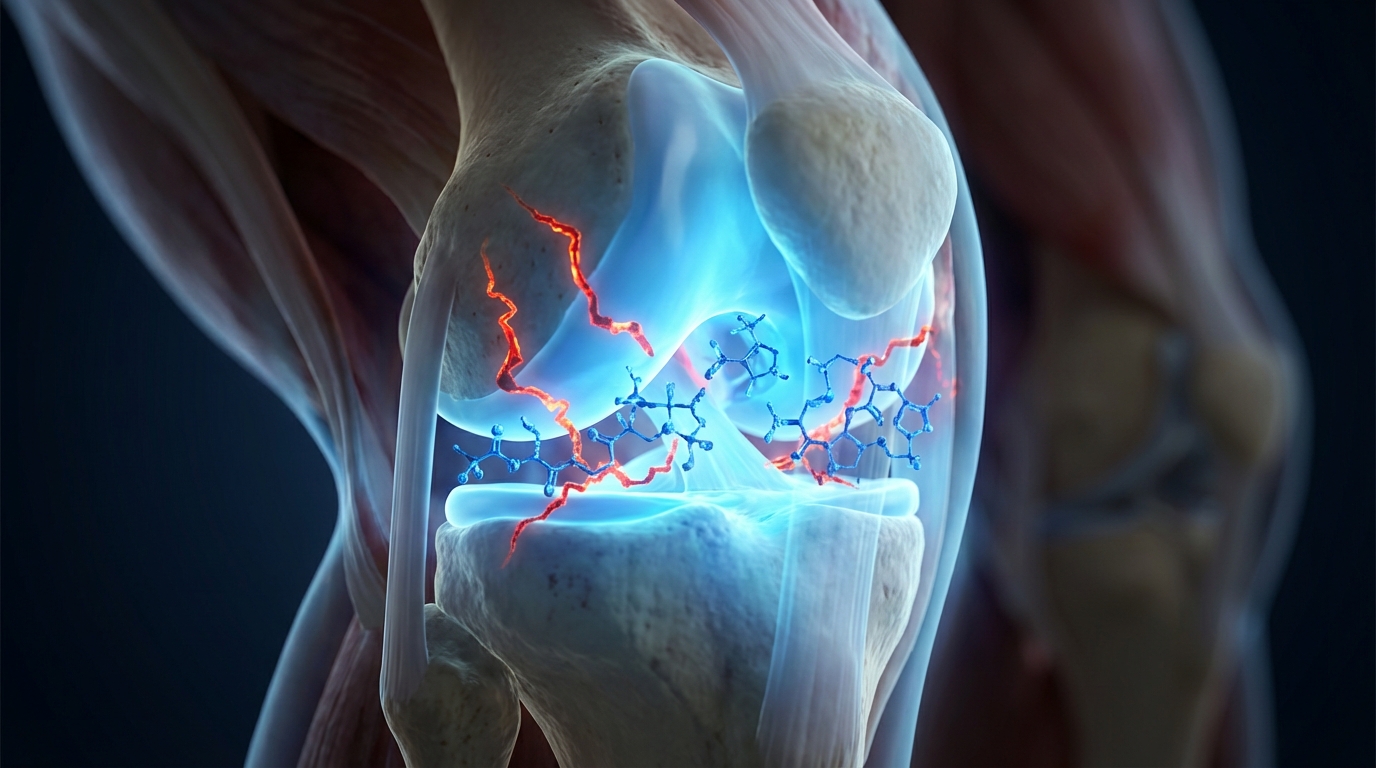
The Silent Destruction: Overexertion and Mechanical Failure
Pain is not your enemy; it is an evolutionary survival mechanism. It is your body’s biomechanical braking system telling you to stop before you cause permanent harm. By removing that crucial pain signal without fixing the underlying issue, you enter a highly dangerous phase of false confidence.
Because you no longer feel the sharp warning of a compromised joint, you may unknowingly overexert yourself. You might go for a run, lift heavy boxes, or simply walk thousands of steps on a joint that is structurally unstable. This accelerated wear and tear rapidly worsens your cartilage damage. Without the protective pain response, minor injuries can swiftly evolve into catastrophic, permanent mechanical failures requiring invasive joint replacement surgery.

The Structural Reality: Pills Don’t Fix Houses
We cannot emphasize this enough: pills do not rebuild structural integrity. To fix the root cause of your joint issue, you must pair the medication with targeted physical therapy. Movement correction, muscle strengthening, and ligament stabilization are the only true paths to long-term healing.
This is a biomechanical reality check. If your house has a cracked foundation, you wouldn’t just install soundproofing in the basement to ignore the creaking floors. You would hire a contractor to pour concrete and reinforce the beams. Your body demands the exact same structural respect.
The Golden Window: Using Medication as a Tool, Not a Cure
This is not a message telling you to throw your prescription in the trash. That would be equally reckless. Medical professionals prescribe NSAIDs for a highly specific, strategic reason: to buy you a window of pain-free mobility so you can actually perform your rehab exercises.
When pain and inflammation are debilitating, physical therapy is nearly impossible. Meloxicam clears the chemical roadblock so you can get to work. During this “golden window” of relief, your sole focus should be on engaging in physical therapy and addressing your core biomechanics. For a deeper understanding of building structural integrity, review our guide on Meloxicam Side Effects: Understanding FDA Black Box Warnings and Health Risks. If you are looking for specific mobility protocols to begin your rehabilitation, reference this Meloxicam Usage: Essential Guide for Managing Chronic Joint Inflammation.

Your Next Steps: Escaping the Paradox
Escaping the painkiller paradox requires a fundamental shift in mindset. You must stop viewing Meloxicam as the finish line and start viewing it as the starting block.
Do not stop taking your prescribed medication without consulting your doctor. Instead, use the relief it provides to actively participate in your own recovery. Call a physical therapist, commit to a daily mobility routine, and start fixing the broken engine instead of just cutting the wire to the warning light. Your future self—and your joints—will thank you.
Conclusion
In the end, masking pain with NSAIDs is an incredibly effective way to survive a painful day, but it is a terrible strategy for long-term health. The “Painkiller Paradox” traps thousands of patients in a cycle of temporary relief and permanent deterioration. Use your medication responsibly, heed the warning of the check engine light, and put in the hard work of physical therapy to genuinely rebuild your body. You have the power to fix the engine—now it’s time to open the hood.
Frequently Asked Questions
Does Meloxicam heal injuries or just stop the pain?
Meloxicam is an NSAID that reduces the chemicals in your body that cause inflammation and pain. It alters your pain perception but does not possess any restorative properties to heal torn ligaments, heal cartilage damage, or repair structural joint issues.
Is it safe to exercise while taking NSAIDs for joint pain?
Yes, but it must be targeted, restorative exercise like physical therapy. The danger arises when patients use the pain relief to perform high-impact activities or heavy lifting, which can rapidly worsen the underlying mechanical failure because the body’s natural pain warning system is muted.
Why did my doctor prescribe Meloxicam if it doesn’t cure my joint problem?
Doctors prescribe these medications to break the cycle of severe inflammation and provide a “golden window” of pain-free mobility. This window is specifically intended to allow you to comfortably participate in physical therapy, which is the actual treatment designed to fix the root mechanical cause of your pain.
Disclaimer: The information provided in this article is for educational purposes only and does not constitute medical advice. Never stop, start, or alter your prescribed medication routine without consulting your primary care physician or a licensed orthopedic specialist. Always work with a professional physical therapist to ensure proper biomechanics during rehabilitation.